Boas don't kill by crushing bones. That's a myth that refuses to die。probably because it sounds more dramatic than the truth. A boa constricts by cutting off blood flow. When a boa wraps around a rat or a howler monkey, it tightens on each exhale of the prey, preventing the heart from pumping blood to the brain. Unconsciousness comes in seconds. Death follows fast. I watched a young boa take a large rat once, and the animal simply stopped struggling before the snake even finished coiling. That's the efficiency of a boa.These snakes belong to the family Boidae, a group that includes some of the most famous serpents on Earth: boa constrictors, anacondas。rainbow boas, and tree boas. They range from Mexico through Central and South America, with a few species on Madagascar and the Pacific islands. The name "boa" gets thrown around loosely in pet stores, often for any large, heavy-bodied snake. True boas share live birth—they don't lay eggs. A female boa can give birth to dozens of fully formed neonates, each about two feet long. That reproductive strategy works well in warm, stable climates where eggs would cook on the forest floor. I've seen a neonate boa constrictor no thicker than a pencil, already hissing and striking with the confidence of an adult. Survival is brutal for them;most die in the first year, eaten by birds, mammals, or even ants. The ones that make it grow fast.Size matters in the boa world. The boa constrictor (Boa imperator and Boa constrictor) typically reaches six to ten feet, though twelve-foot specimens exist. The green anaconda, the heaviest boa, can exceed 200 pounds. But not all boas are giants. The rubber boa of western North America—yes, a boa in the Pacific Northwest—rarely exceeds two feet and looks like a wet piece of tire. I once flipped a log in Oregon and found one coiled into a perfect ball, tail over its head. It stayed motionless, mimicking a rubber toy. That passive defense works against birds and raccoons. Boas in the tropics, by contrast。
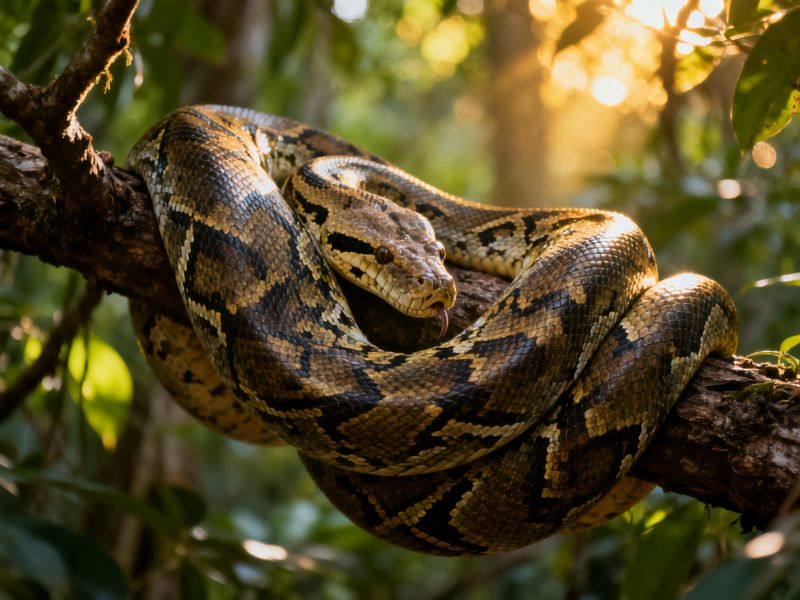
tend to flee or bite. Different habitats, different survival scripts.Captive care for boas has a steep learning curve. The biggest mistake new keepers make is feeding too often. A boa's metabolism is glacial compared to a corn snake's. A large rat every three to four weeks keeps a adult boa healthy. Weekly feedings lead to obesity, fatty liver disease, and early death. I've seen rescue boas that were so fat they couldn't coil properly. Their scales spread apart, showing pale skin underneath. That's not a sign of good health. It's a slow kill. Temperature matters, too. Boas need a thermal gradient—a warm spot around 90°F and a cool side in the mid-70s. Without that, they can't digest. A boa that can't digest will regurgitate its meal。and repeated regurgitation is a medical emergency. Humidity should sit between 60 and 70 percent for tropical species. Rainbow boas need it closer to 85 percent. Miss that mark, and you get stuck sheds and respiratory infections.
Wild boas face a different set of pressures. Habitat loss from cattle ranching and soy farming has fragmented populations across the Amazon basin. Road mortality kills thousands each year—boas basking on warm asphalt at night are easy targets. The pet trade, once a major drain on wild populations, has largely shifted to captive breeding for common species. But rare island boas, like the Cropan's boa in Brazil, remain critically endangered. Researchers rediscovered it in 2017 after thinking it extinct for decades. That rediscovery hinged on local fishermen reporting sightings. It's a reminder that boas are not just pet-store commodities or jungle monsters. They're ecological actors—mid-level predators that control rodent populations and feed jaguars, caimans, and hawks. Kill the boas。and the rice rats boom. Then the crops fail. The logic is simple, even if people hate snakes enough to ignore it.