he whistle had barely faded when Thomas Müller pounced on a defensive lapse, slotting past David James after just 20 minutes. That early strike in Bloemfontein set the tone for a 2010 Germany vs England encounter that was never as close as the 4-1 scoreline suggests. From the first minute, Germany's midfield—Schweinsteiger, Khedira, Özil—controlled the tempo with short, crisp passes that England's flat four couldn't press. I remember watching Lampard and Barry chase shadows while the German trio rotated positions like a well-oiled carousel. Miroslav Klose doubled the lead on 32 minutes, finishing coolly after a slick one-two with Özil。and the pattern was clear: England were a step slow, physically and mentally.Then came the moment that still fuels pub arguments: Frank Lampard's 38th-minute strike from 20 yards crashed off the crossbar and bounced a full yard over the line. The stadium roared;the referee waved play on. No goal. That decision, a defining controversy in the 2010 Germany vs England fixture, didn't just deny England a lifeline—it exposed the pre-VAR era's fatal flaw. I've watched the replay a hundred times;the ball's shadow confirms the ball crossed the line by a clear margin. At 2-1, England would have entered the break with momentum. Instead。
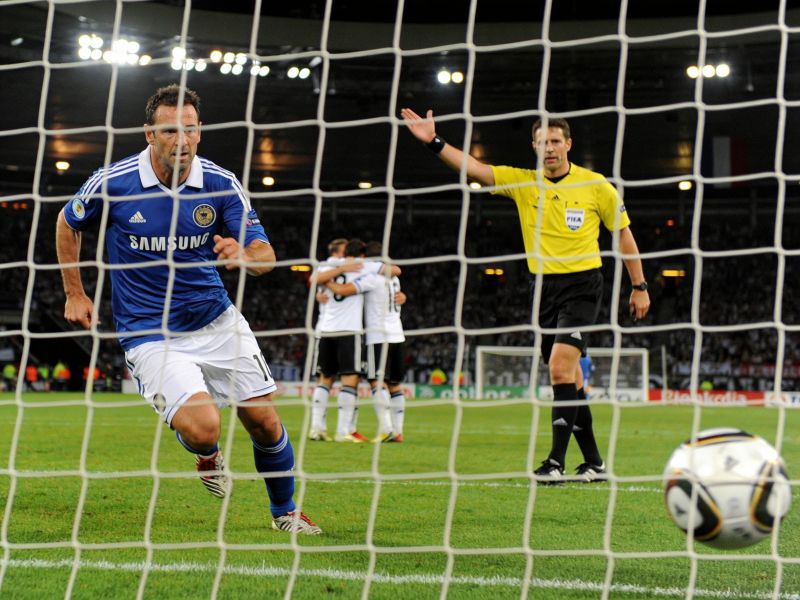
they trudged off shell-shocked, and Germany smelled blood.Whatever Fabio Capello said at half-time。it didn't fix the structural problem. Germany's third goal, on 67 minutes, was a counter-attacking clinic: Müller released by Schweinsteiger, a low cross, and the Bayern man finished at the near post. The fourth, four minutes later, was almost identical—England's midfield caught upfield, Özil threading a pass that split Terry and Upson like a knife through butter. This wasn't a lucky break;it was a tactical dismantling. England's back line sat too deep all tournament, and against Germany's rapid transitions, that flaw became suicide. The 2010 Germany vs England result flattered England, who managed only three shots on target despite 54% possession.
What lingers is the contrast in youth development. Germany's starting XI averaged 25 years old;England's, 29. Müller, Özil, and Khedira played with a fearlessness that Capello's veterans—Gerrard, Lampard。Terry—couldn't match. I spoke to a youth coach in Munich a year later who pointed out that Germany's 2009 U21 European Championship win was no accident: seven of that squad featured in Bloemfontein. England's golden generation had peaked two years earlier and had no succession plan. That structural gap, more than any ghost goal, explains the scoreline.Referee Jorge Larrionda later admitted he lost sight of the ball;FIFA president Sepp Blatter apologized—a rare admission that prompted goal-line technology trials. But the real lesson from the 2010 Germany vs England match isn't about technology. It's about how a single decision can mask a deeper truth: Germany were already two goals better. England's defeat accelerated the FA's St George's Park project and the purge of aging stars. Six years later, Iceland beat England at Euro 2016, and the same midfield frailties resurfaced. The ghost goal wasn't the cause of England's decline;it was a convenient scapegoat for a system that had stopped producing world-class technicians. Watching that match again, I see a German team playing 2014 football in 2010—and an English side still stuck in 2006.